


Kiki: Chat, Flirt, People Near
4.3470.00 Reviews
App Specs
- Version
- 1.1.43.1
- Updated On
- License
- Free
- Downloads
- 100,000+
- Developer
- KikiHub ™
- Categories
- Lifestyle
- Platform
- Android
Screenshots





 Analysis by AppCompare
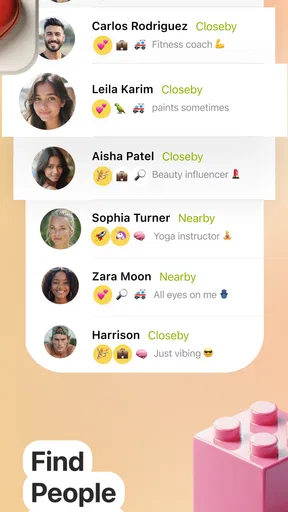
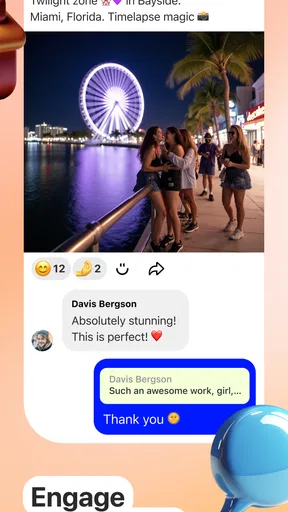
I approached Kiki: Chat, Flirt, People Near as a lifestyle app built around spontaneous online conversation rather than a traditional social network. Its appeal is simple: it puts nearby discovery, casual chat, and anonymous interaction in the same experience. That makes it easy to understand within a few minutes, but the quality of the experience depends heavily on who is available, how comfortable you are with open-ended conversations, and how carefully you manage your privacy.
After spending time with it, I see Kiki as a tool for people who want a lighter, less formal way to meet others digitally. It is not trying to replace a full messaging platform, a carefully structured dating service, or a private group app. Instead, it sits in the space between browsing people nearby and starting a conversation without needing an established connection first. The biggest strength is immediacy; the biggest weakness is that immediacy also makes the experience unpredictable.
How Kiki feels when your connection is doing the work
The app’s central idea only makes sense when the network is active. Nearby discovery, chat availability, and the rhythm of replying all rely on a steady connection. When the connection is good, the experience feels quick and conversational: you can look around, notice someone interesting, and decide whether to engage without building a detailed profile or planning a long interaction.
That network dependence shapes the mood more than it might seem at first. In a conventional social app, you can often scroll through saved posts or revisit an established feed even when the connection is weak. Kiki is more present-tense. Its value comes from what is happening among available people at that moment, so a slow connection or a quiet area can make the app feel much less lively.
I found that this makes Kiki better suited to short, intentional visits than to endless background browsing. I would open it when I had a few minutes and wanted to see whether there was an interesting conversation nearby, rather than leaving it running throughout the day. That approach also reduces the temptation to treat every profile or message as something that demands an immediate response.
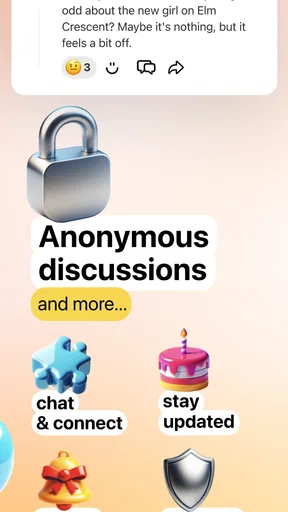
The anonymous side of the experience adds another layer to connectivity. Anonymity can lower the social pressure of sending the first message, especially for someone who dislikes the formal atmosphere of dating apps. At the same time, fewer identity cues mean that a conversation may require more patience before you understand who you are speaking with. A fast connection helps messages move along, but it does not automatically make the interaction meaningful.
This is where Kiki differs from the usual alternatives. Dating apps generally encourage structured profiles, matching, and deliberate decisions. Messenger apps assume you already know the person or belong to a shared group. Local community platforms tend to organize discussion around neighborhoods, events, or topics. Kiki feels more spontaneous than all three, but it also gives you less context before you start talking.
Worth Reading Before You Choose

EA SPORTS FC Mobile 26 Is a Bigger Football Game, but It Takes Time

Flipboard Shows What News Apps Must Do Beyond the Feed

Switching to Android Auto Means Rethinking Your Driving Routine

Google Calendar Makes a Crowded Week Easier to Manage

Ludo King Makes the Most of the Minutes Between Plans

Baby Panda World Brings Quick Play to Modern Phones, but Its Game Library Feels Busy
What nearby discovery is actually good for
The nearby concept is most useful when you treat it as a conversation prompt rather than a promise of instant friendship or romance. Seeing people connected to your general surroundings can make an opening message feel less random, but it does not tell you whether the person shares your interests or intentions. I recommend starting with a neutral question instead of assuming that “nearby” means the other person wants to flirt.
A practical example would be opening Kiki while waiting for a friend in a busy public place. You might browse for a short while, find someone who seems open to conversation, and exchange a few messages about the setting or the local area. That is a realistic use case because the app’s value comes from adding a social option to an otherwise idle moment. It is less convincing if you expect it to produce a carefully filtered, long-term connection every time.
There is also a useful trade-off between anonymity and accountability. Anonymous chat can make it easier to be yourself, ask a slightly awkward question, or leave a conversation without feeling that your established social identity is involved. However, it also means you should avoid sharing personal details simply because a conversation feels friendly. I would keep early exchanges general and move slowly if someone pushes for contact information, a precise location, or an in-person meeting.
Using it in ordinary mobile situations
Kiki makes the most sense on a phone because the situations it targets are mobile by nature: commuting, waiting, taking a break, or looking for a different kind of conversation during a quiet evening. I would not describe it as an app that requires a long setup session. Its value is in reducing the distance between opening the app and finding something to respond to.
That convenience can also create a problem. Short mobile sessions encourage quick judgments. You may dismiss someone after a brief glance or reply before deciding what you are comfortable sharing. My advice is to separate curiosity from trust: use the first messages to learn whether the person communicates respectfully, not to prove anything about yourself.
The app is rated for mature users, which is important to take seriously. That rating should not be treated as a guarantee that every conversation will suit every adult, and it certainly does not make the environment appropriate for younger users. I would expect anyone using Kiki to be comfortable setting boundaries, ending conversations, and reporting or blocking people when an exchange becomes uncomfortable.
For people who enjoy meeting strangers online, the low-friction format may feel refreshing. For people who prefer clear intentions, detailed profiles, or strong control over who can contact them, the same format may feel too loose. In that situation, a conventional dating service or a private interest-based community would probably be a better choice.
When the connection fails or the conversation loses momentum
Network-dependent apps are judged not only by their best moments but also by what happens when the experience breaks its rhythm. With Kiki, a weak connection can interrupt the basic cycle of discovering someone, opening a chat, and receiving a response. Even a short delay matters more in a live conversation than it does when reading an older post.
My practical recovery routine would be simple: stop sending repeated messages, check whether the connection has stabilized, and return to the conversation later rather than assuming the other person is ignoring you. This is especially important in anonymous spaces, where silence is difficult to interpret. A delayed reply may mean a poor connection, a closed app, or a change of interest; it does not automatically mean something personal.
The same principle applies when a chat becomes awkward. Kiki’s casual format makes it easy to begin, but beginning is not the same as sustaining a useful exchange. If the other person gives one-word replies, changes the subject repeatedly, or ignores a boundary, I would end the conversation instead of trying to rescue it. The app works best when users treat leaving as a normal option rather than a failure.
I also recommend keeping expectations modest during quieter periods. A nearby-oriented experience can feel very different depending on the time, place, and number of active users around you. If the app seems empty, that does not necessarily mean it has no value; it may simply be a poor moment to use it. I would check again later rather than spending a long session refreshing the same experience.
This is one area where a standard messaging app has an advantage. A conversation with an existing contact remains available regardless of whether there is a lively local audience at that moment. Kiki offers more discovery, but less continuity. If your main goal is dependable communication with known people, it is not the strongest replacement.
Keeping mobile data and attention under control
Because Kiki is centered on live discovery and chat, I would use it deliberately when mobile data or battery life matters. I would avoid leaving it open while doing unrelated tasks and would close the session once I had finished the conversation I came for. This is not a criticism of one specific feature; it is a sensible habit for any app whose usefulness depends on active network communication.
A data-conscious workflow also improves the social experience. Decide what you want from the session before opening the app: a quick conversation, a look at nearby activity, or a chance to meet someone with a shared interest. That prevents aimless browsing and makes it easier to notice when the app is no longer giving you anything useful.
The free entry price makes experimenting straightforward, but optional purchases range from small amounts to much larger per-item amounts. I would not spend money simply to compensate for a quiet network or an unproductive conversation. First use the free experience long enough to understand whether the nearby and anonymous format fits your habits. If you do consider a purchase, treat it as an optional convenience rather than a requirement for basic communication.
That approach is particularly important for an app built around uncertain social outcomes. A purchase cannot guarantee that the right people will be available, that a chat will continue, or that someone will share your intentions. The best reason to pay would be a clearly understood feature that improves a pattern of use you already enjoy, not the hope that spending will create chemistry.
Privacy also deserves a place in data-conscious use. I would avoid sharing a full name, home address, workplace details, daily routine, or identifiable photographs with a stranger too early. Nearby discovery can make a conversation feel geographically familiar, but familiarity is not the same as trust. If you eventually decide to meet someone, choose a public setting, tell a trusted person, and keep control over your own transport and exit plan.
Who will enjoy Kiki, and who should choose something else
I think Kiki is a good fit for adults who like low-pressure online conversations and enjoy the possibility of meeting people connected to their surroundings. It may also suit someone who finds conventional dating profiles exhausting and wants a more spontaneous starting point. The anonymous element can help users who are shy about making the first move, provided they are equally comfortable with uncertainty.
I would be more cautious recommending it to someone seeking a highly curated dating process. If you want detailed compatibility information, explicit relationship goals, or a strong sense of identity before messaging, a structured dating app is likely to feel safer and more efficient. Likewise, if you mainly want private conversations with friends, a standard messenger is the obvious alternative.
People who dislike ambiguous social situations may also find the format tiring. Kiki can put the responsibility on you to interpret tone, decide how much to reveal, and judge whether a conversation is worth continuing. That freedom is part of its appeal, but it is not the same as guidance. The app gives you an opening; it does not remove the need for judgment.
The app comes from KikiHub ™ and is available as a free lifestyle app for devices running Android 8.0 or later. Its current version is 1.1.43.1, and it has passed the early adoption stage with over one hundred thousand installs. Those details make it easy to try, but they do not change the central question: do you actually enjoy open-ended conversations with people you do not already know?
What the public response suggests, and what it cannot decide for you
Kiki holds an average rating of 4.3 from around five thousand seven hundred ratings, with roughly four hundred seventy written reviews. I see that as a positive sign that the concept works for a meaningful group of users, but ratings are especially dependent on expectations in a social app. Someone looking for spontaneous chat may be delighted, while someone expecting a polished matchmaking funnel may judge the same experience differently.
The most useful way to interpret that response is to focus on fit rather than popularity. Kiki’s audience is likely to value the combination of nearby discovery, casual conversation, and anonymity. If those three ideas appeal to you together, the app is worth trying. If even one of them makes you uncomfortable, the experience may feel frustrating despite the favorable average.
I would also judge it over several different mobile contexts rather than one quick visit. Try it during a time when you genuinely want conversation, then notice whether the available interactions feel respectful and worthwhile. A single quiet session cannot define the app, but repeated sessions can reveal whether its network-dependent design matches your routine.
My connectivity verdict
Kiki is an interesting lifestyle app because its social value is closely tied to connection in both senses: the quality of the internet connection and the quality of the human connection it helps you start. When the network is responsive and the nearby audience feels active, the app can turn an ordinary spare moment into a surprisingly engaging conversation. When either side is weak, there is not much else to hold the experience together.
I recommend it to adults who want an informal way to discover conversations and are willing to manage ambiguity, privacy, and expectations themselves. I would skip it if you need reliable contact with known people, carefully filtered matches, or a clearly structured path toward a relationship. For everyone else, the free version is a sensible way to test the idea without committing to a different social routine.
My final view is positive but measured: Kiki is best used as a short, intentional window into nearby online conversation, not as a replacement for every other social app. Keep your personal information limited, do not interpret silence too quickly, and do not spend money to force a connection that is not naturally developing. Used with those boundaries, it offers a distinctive and approachable way to see whether a stranger’s conversation can make a quiet mobile moment more interesting.
Pros
- Quickly shows nearby profiles based on your location.
- Simple interface makes browsing and starting chats easy.
- Useful filters help narrow down potential matches.
- Supports casual conversations as well as romantic connections.
- Profile discovery can feel lively in areas with many users.
Cons
- Location-based matching may raise privacy concerns for some users.
- The quality of profiles can vary considerably by region.
- Some features may require in-app purchases or subscriptions.
- Users may encounter unsolicited messages or low-effort profiles.
- A smaller local user base can make matching less effective.
FAQs for Kiki: Chat, Flirt, People Near
What is Kiki: Chat, Flirt, People Near used for?
Kiki: Chat, Flirt, People Near is a social and dating-style app designed to help users discover people nearby, start conversations, and potentially make new friends or romantic connections. Its main experience revolves around browsing profiles, showing interest, and using chat features. Results can vary depending on your location, age group, interests, and how active the local user community is.
Is Kiki: Chat, Flirt, People Near free to download and use?
The app may be available to download at no initial cost, but some features can require in-app purchases, subscriptions, or virtual credits. Depending on the current version, users may encounter limits related to messaging, profile visibility, likes, or other premium tools. Before confirming a purchase, carefully review the pricing, renewal terms, and subscription settings shown through the Google Play Store or Apple App Store.
Is Kiki safe for meeting and chatting with new people?
Kiki can provide tools for discovering and communicating with other users, but no social or dating app can guarantee that every profile is genuine or trustworthy. Avoid sharing passwords, financial information, private documents, or your exact home address. Use the report and block options when available, and if you decide to meet someone, choose a public place, tell a trusted person, and arrange your own transportation.
What information does Kiki require to create a profile?
The information needed may depend on the sign-up method and the app version, but users can generally expect to provide basic account details such as a name or nickname, age, gender, location, and profile photos. The app may also request permission for notifications, location, camera, or photo access. Review each permission carefully and disable anything that is not necessary for the features you intend to use.
Can I delete my Kiki account and control my privacy?
Most users should be able to manage their profile, privacy, notifications, and account settings from within the app, although the exact menu names may change between Android and iOS versions. Look for an account, settings, help, or privacy section to find deactivation or deletion instructions. If you have an active subscription, cancel it through your device’s store separately, because deleting the app usually does not stop recurring payments.


